
Redefining the Brand
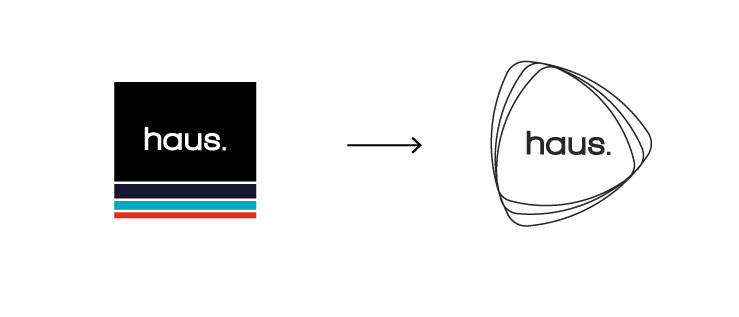
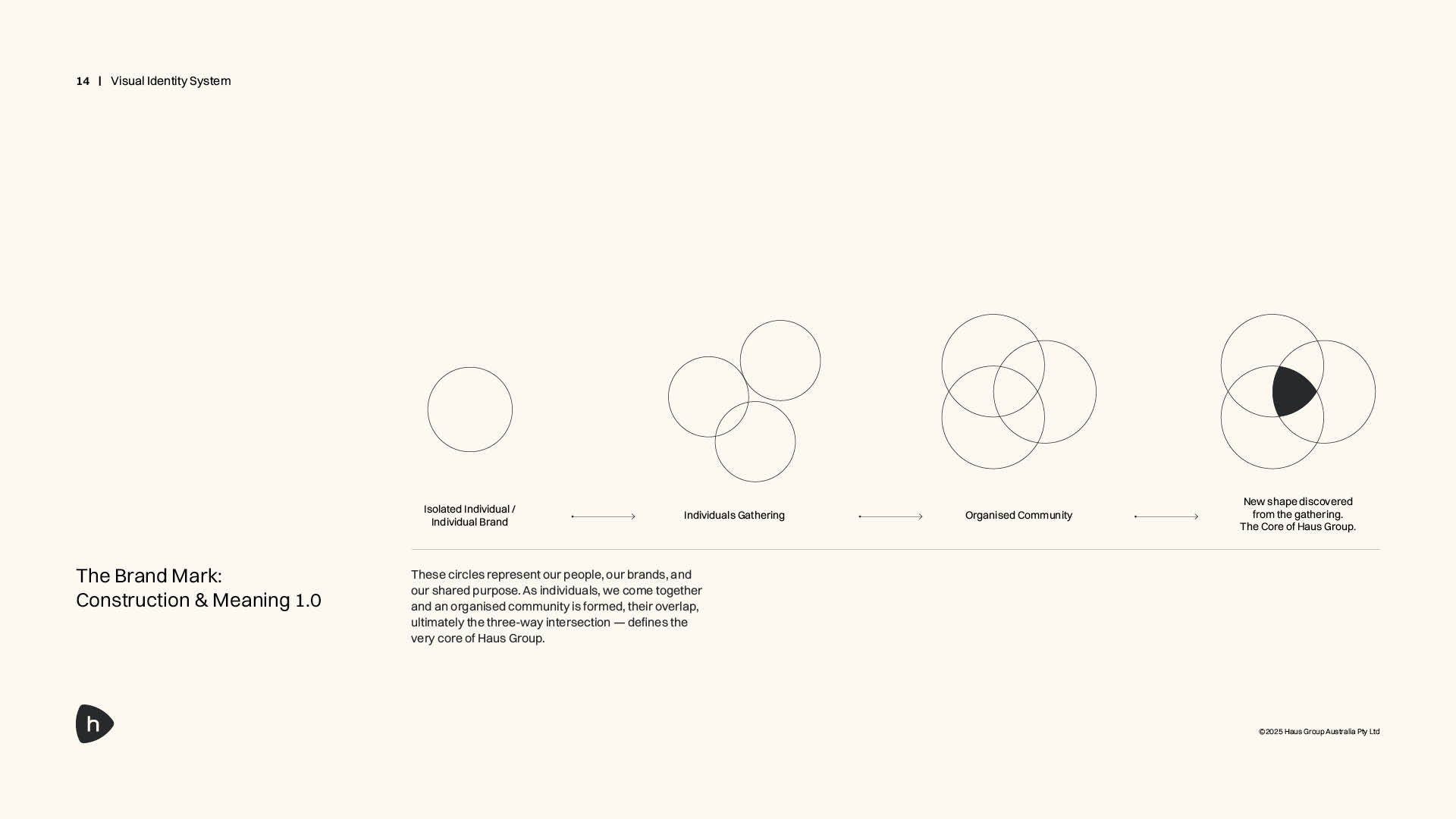
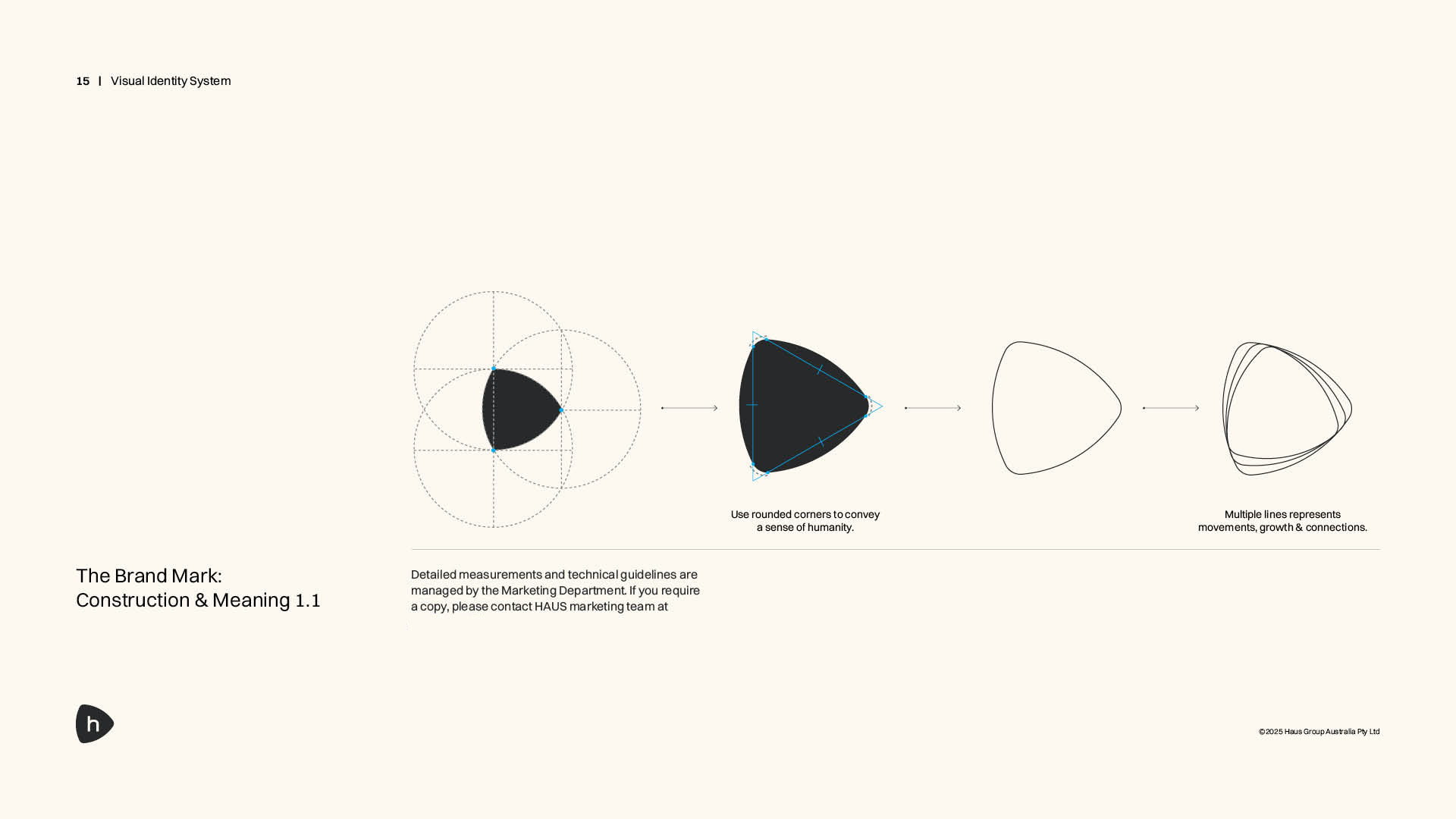
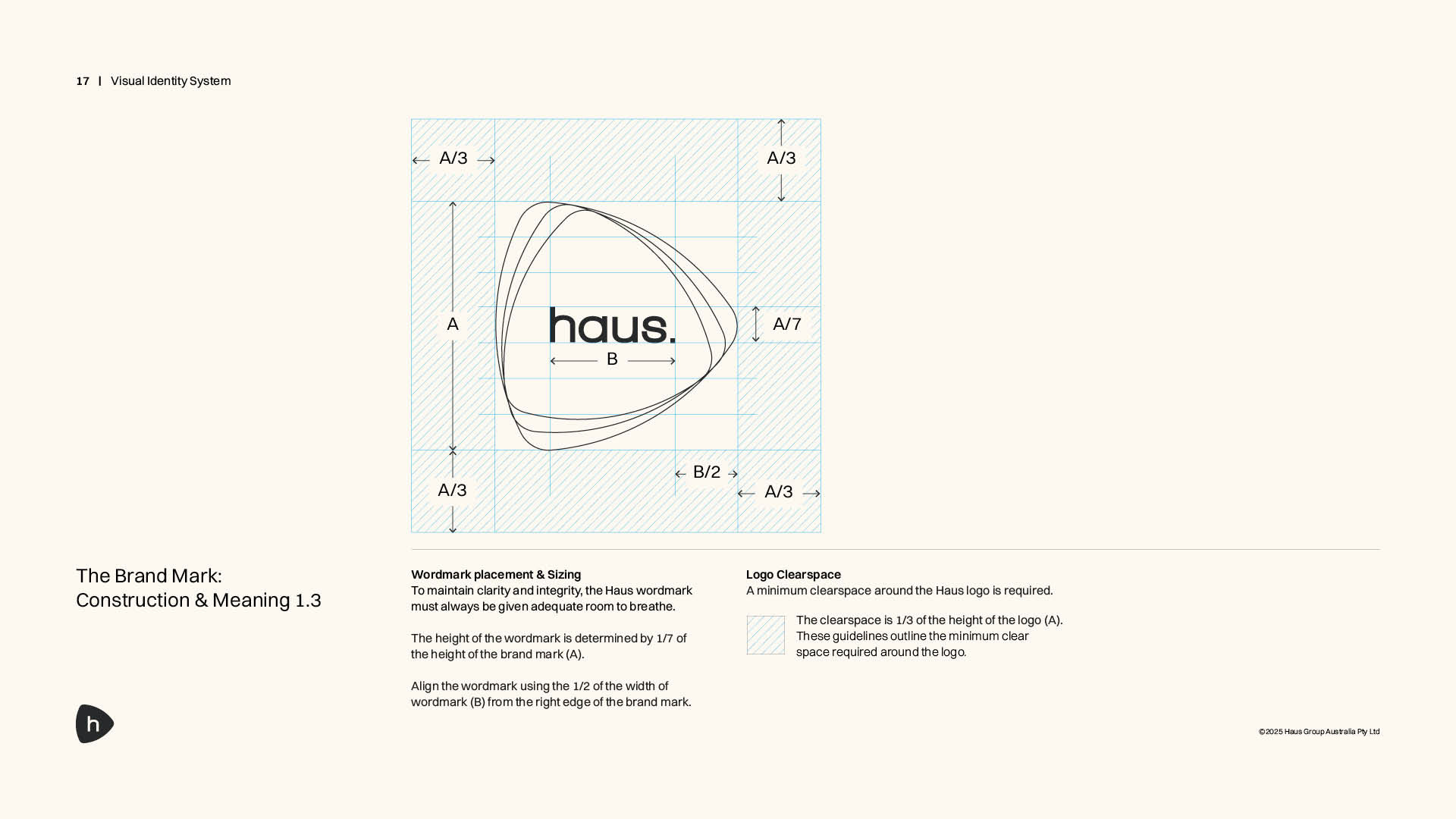
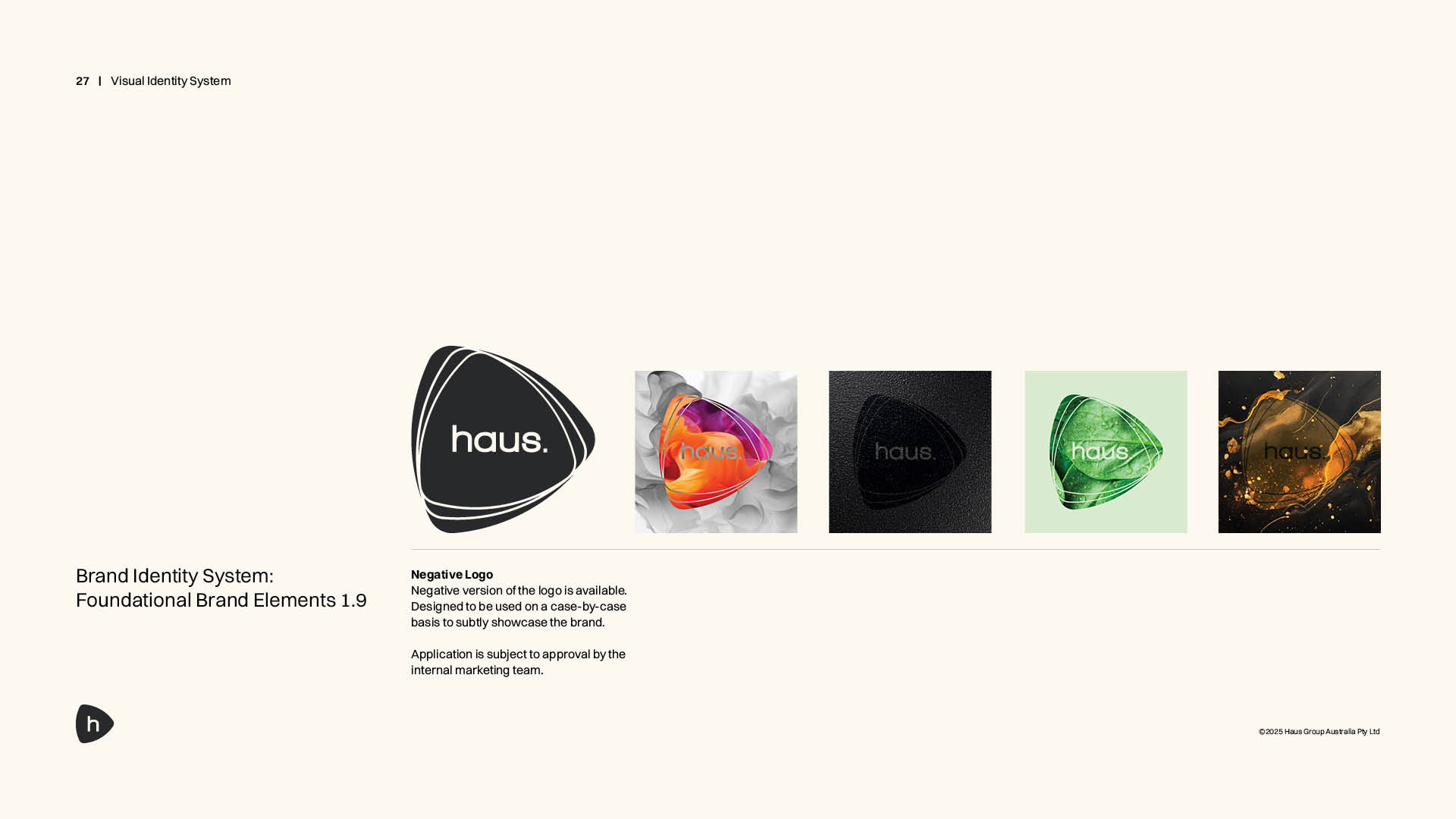
The project began with the evolution of the Haus Group identity, including a redesign of the logo and refinement of the broader visual language. Rather than treating the identity as a standalone visual exercise, the goal was to establish a stronger foundation for how Haus Group could communicate consistently across corporate, digital and internal touchpoints. This included defining the core visual system around typography, colour, imagery, layout and the practical application of the new identity.
Building the Brand from the Inside Out
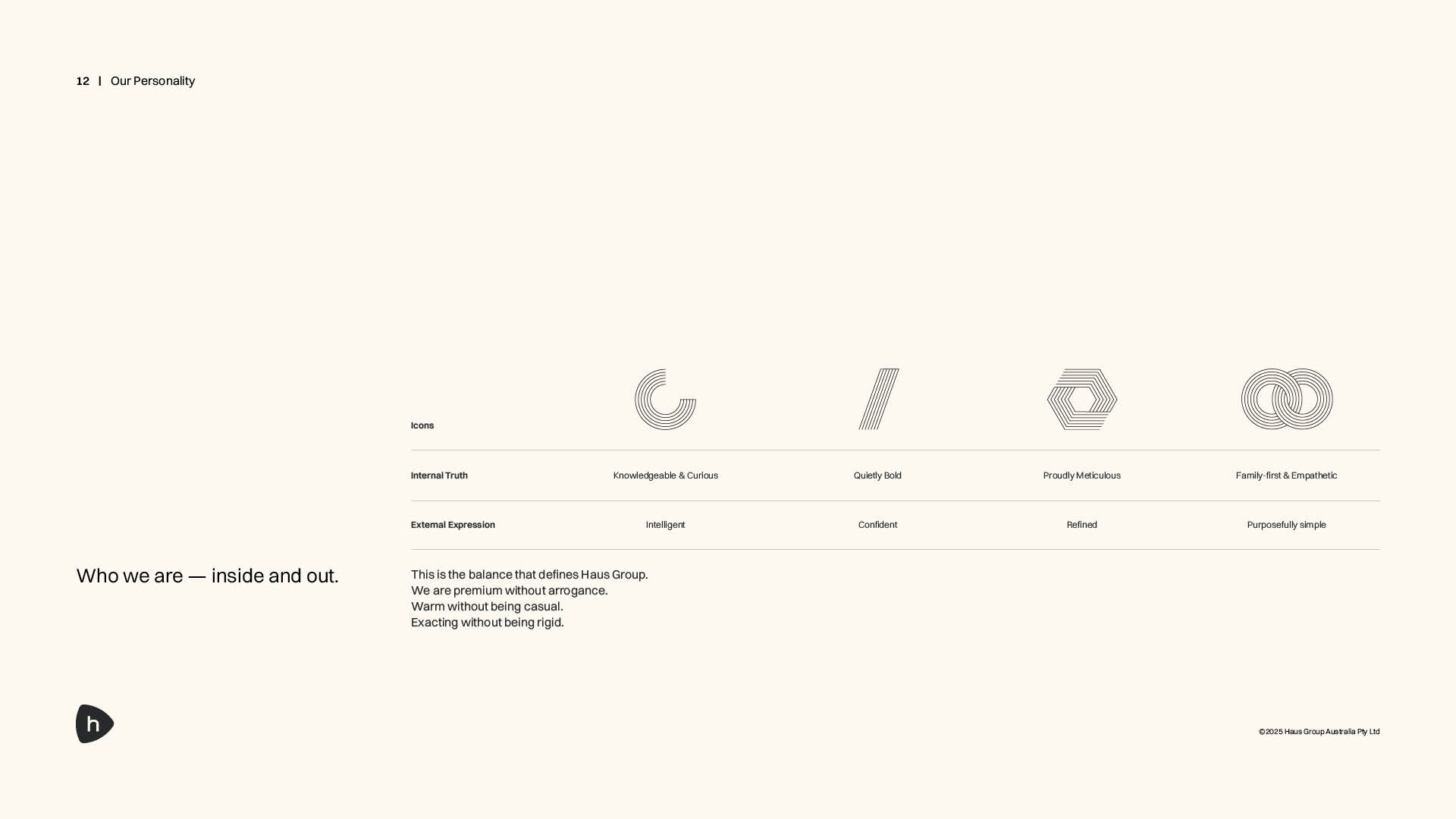
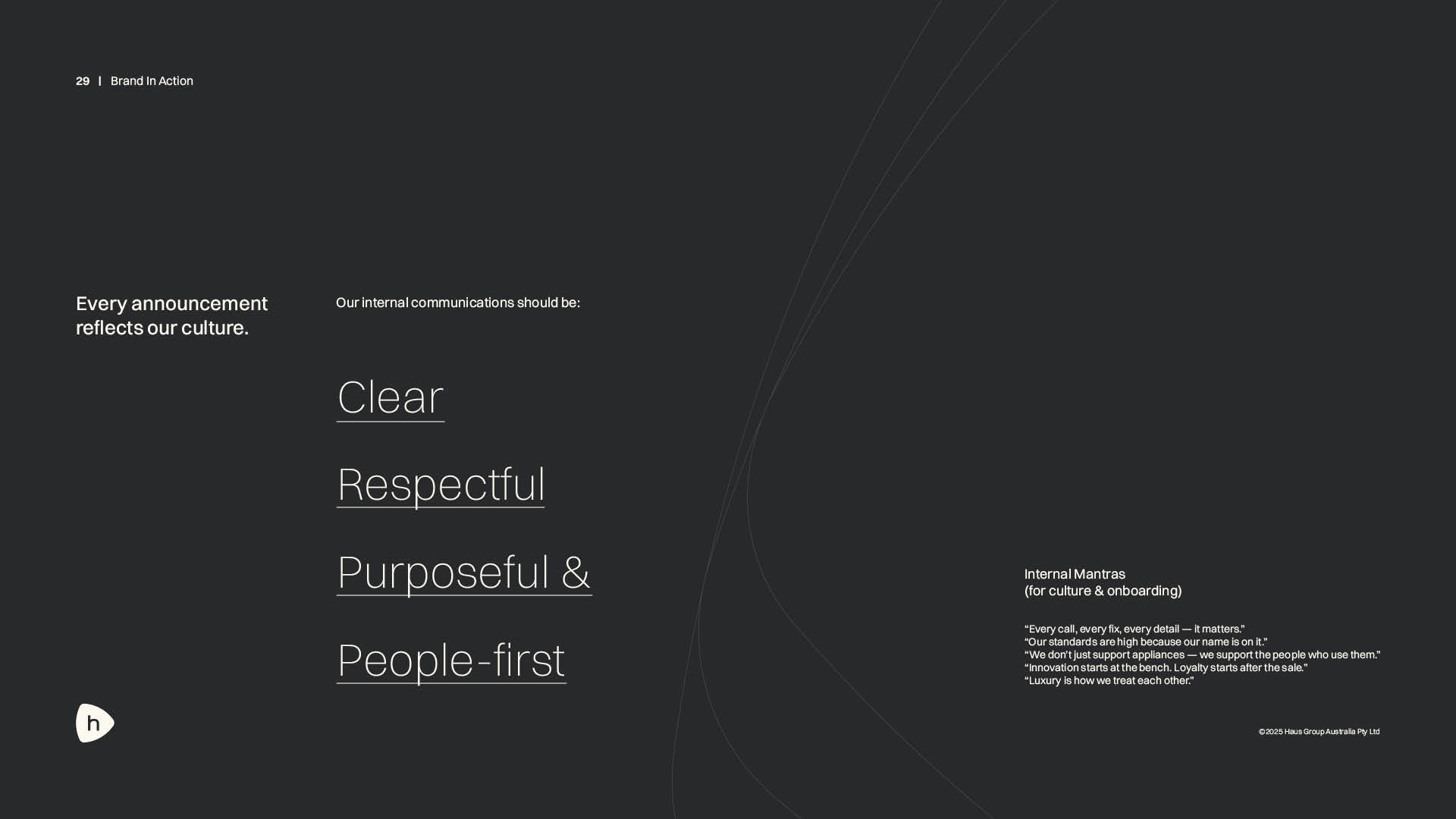
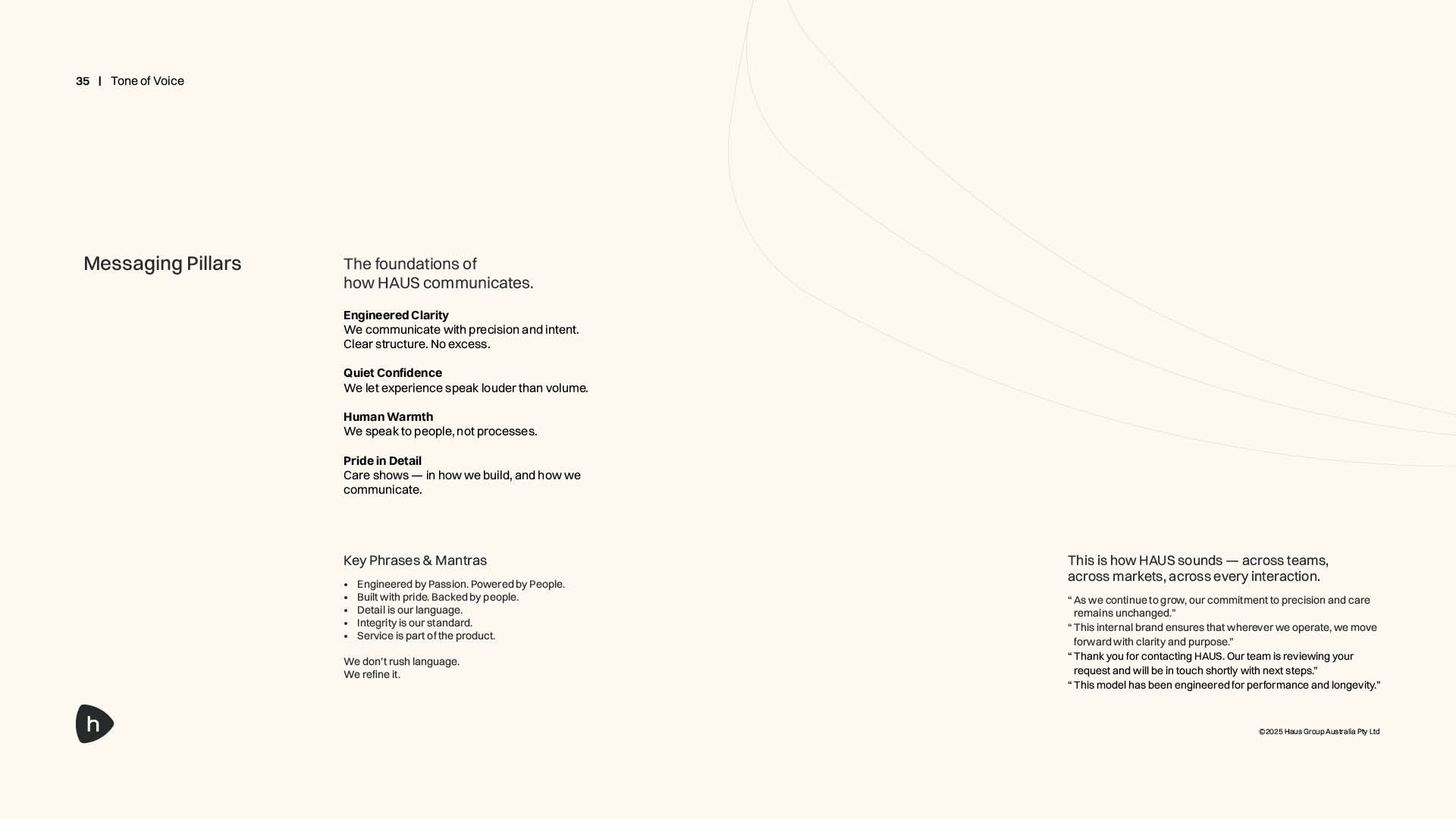
Alongside the visual guidelines, I helped develop an internal brand guide that went beyond traditional logo and style rules.
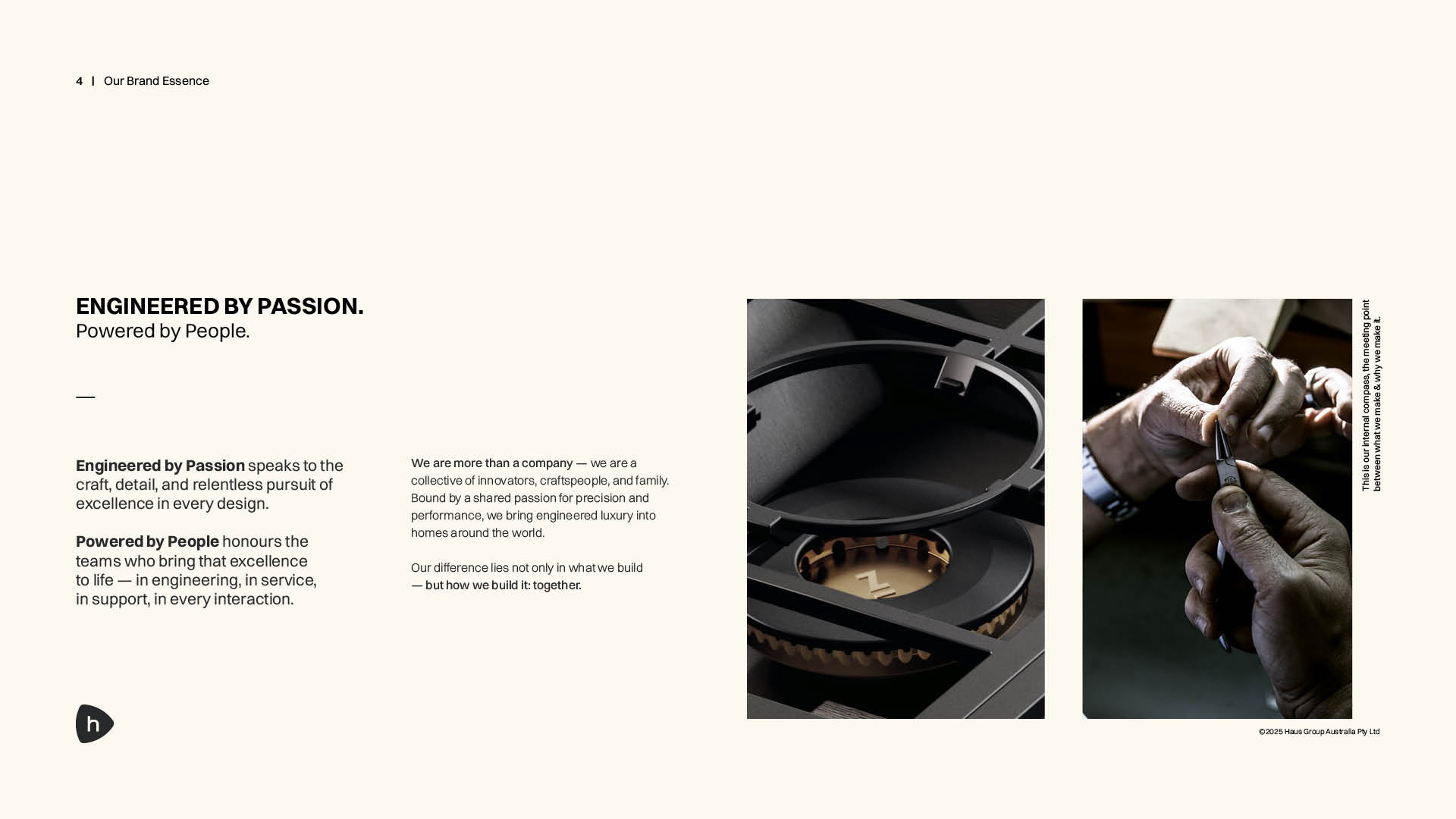
The guide established a shared understanding of what Haus Group represents — its culture, personality, values, communication principles and tone of voice. This created a framework not only for how the brand should look, but how it should think, speak and behave. The result was a more complete brand system that could guide future communication, content and digital experiences rather than simply prescribing visual consistency.
Translating the Brand into Digital
With the brand foundation established, the next challenge was translating those principles into a digital environment.
This meant defining how Haus Group should communicate online: the language used throughout the website, the hierarchy of information, the balance between corporate and brand storytelling, and the way visual principles should translate into interaction and layout. Rather than simply applying the brand colours and typography to a website, the aim was to make the digital experience itself feel distinctly Haus.
Architecting the Ecosystem
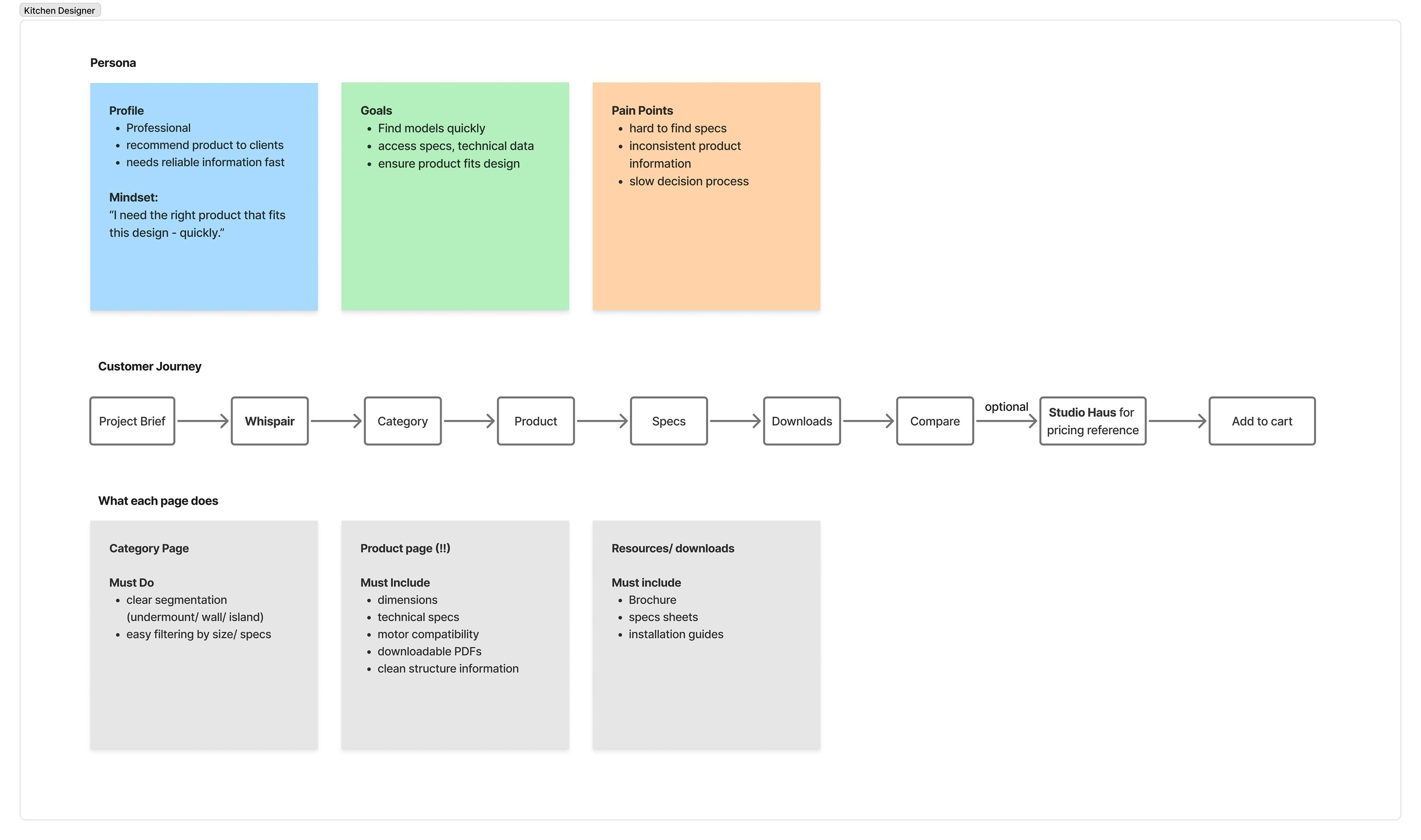
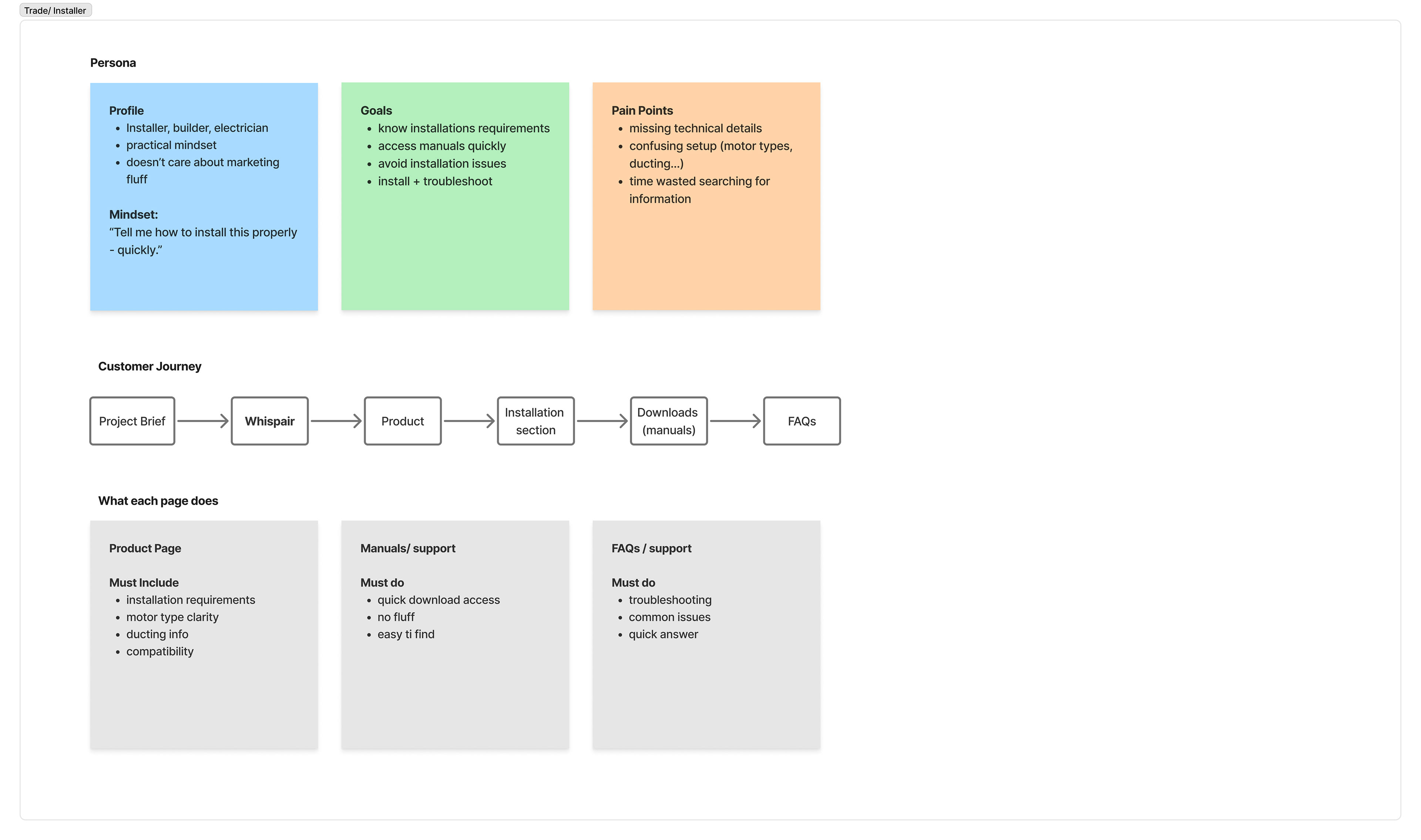
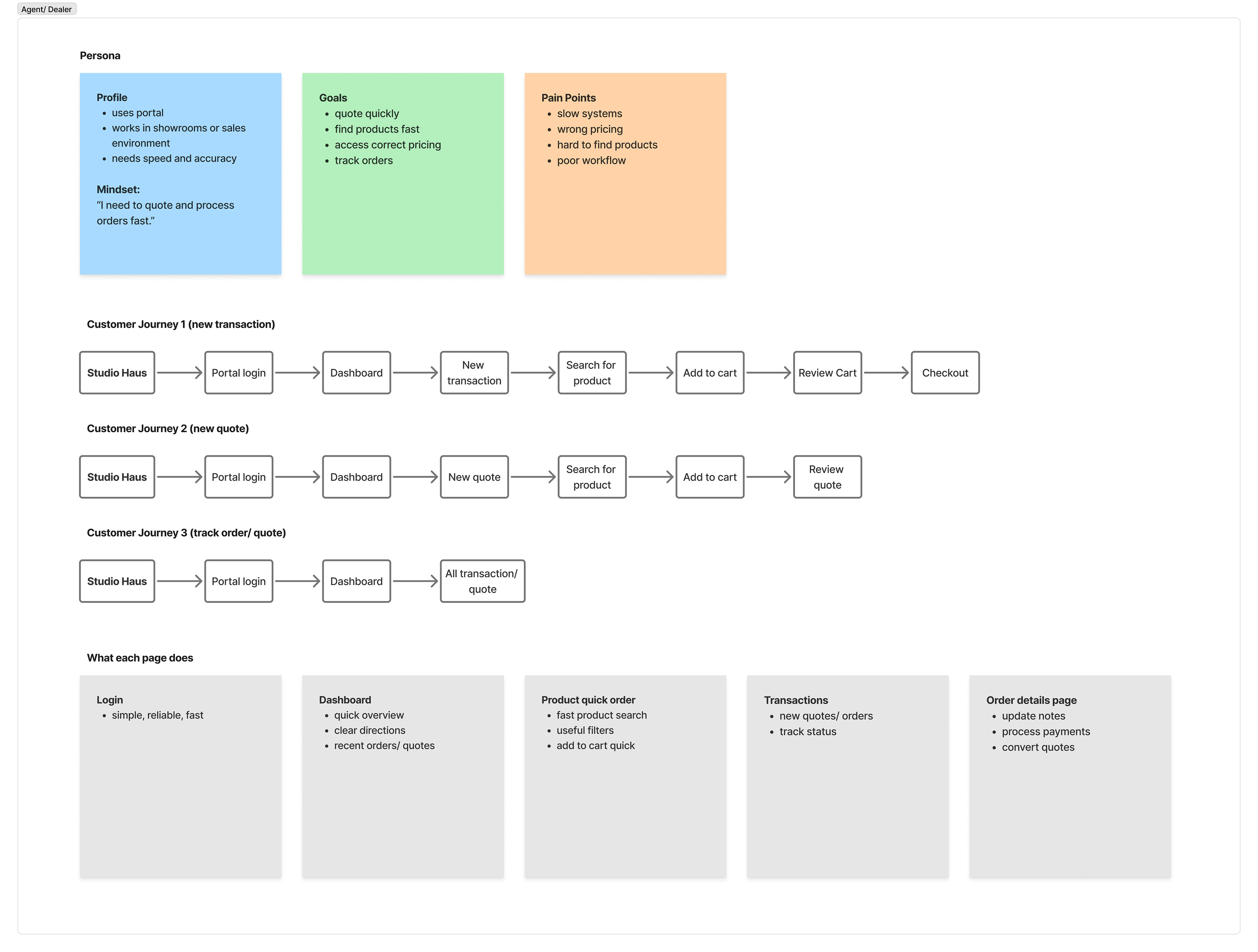
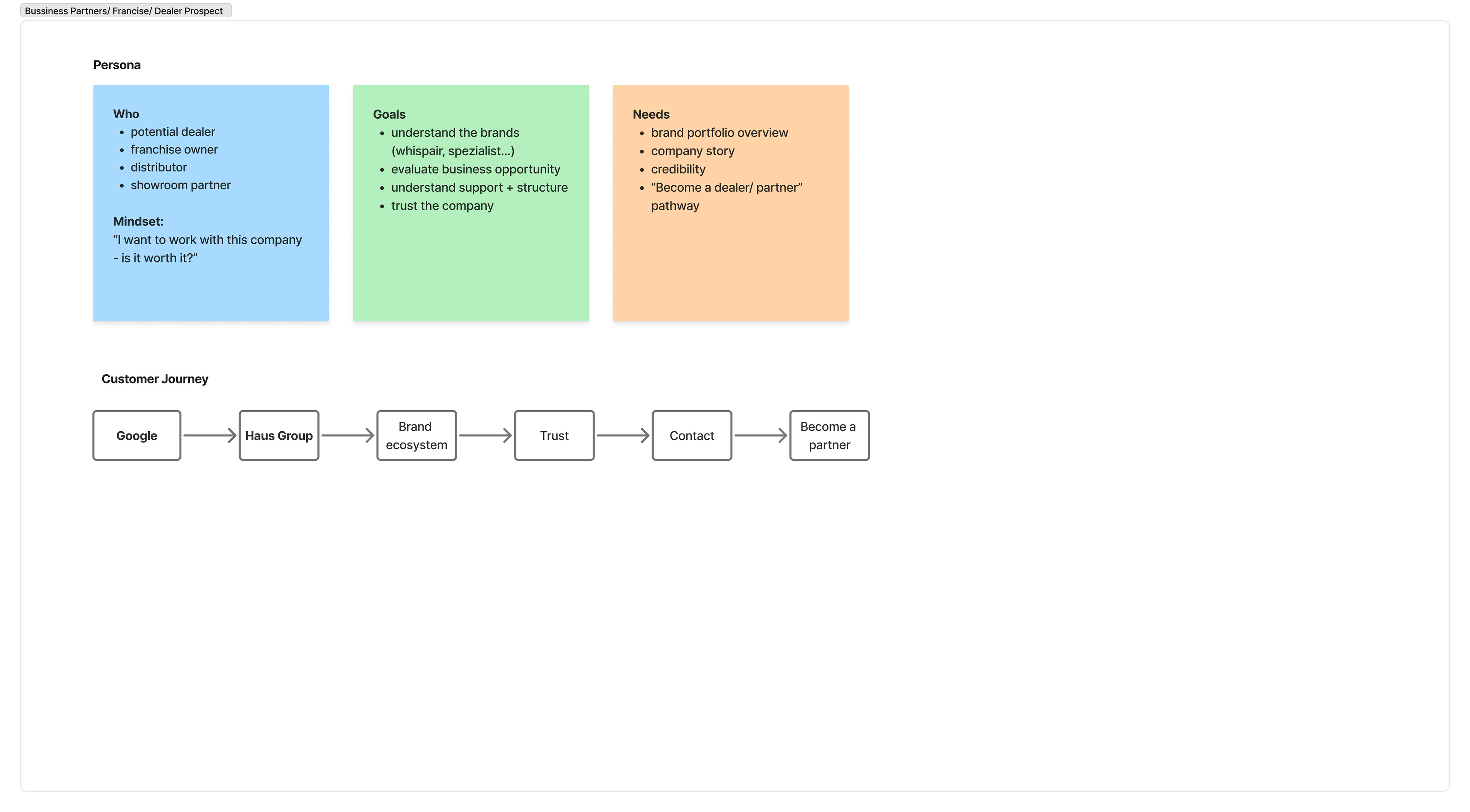
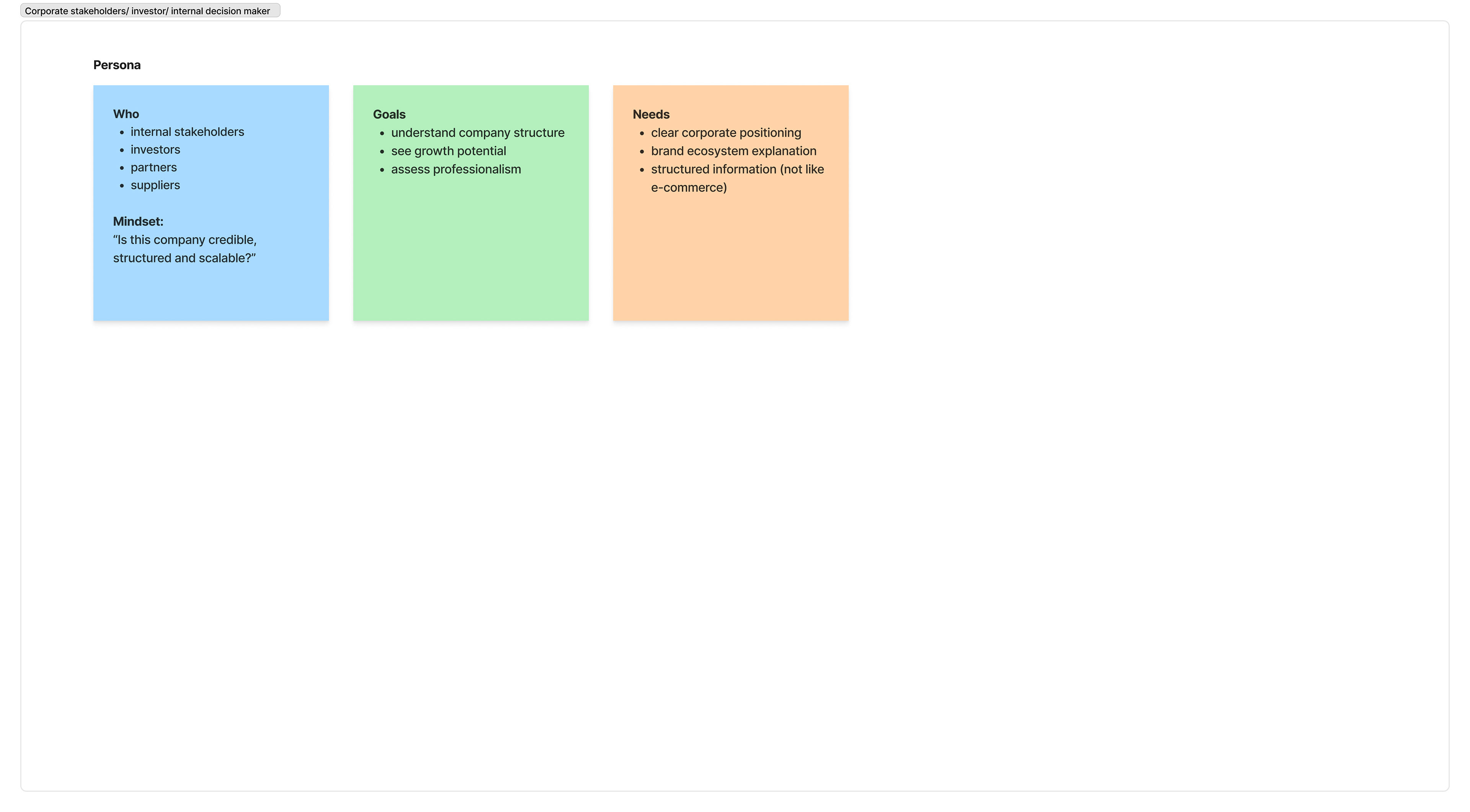
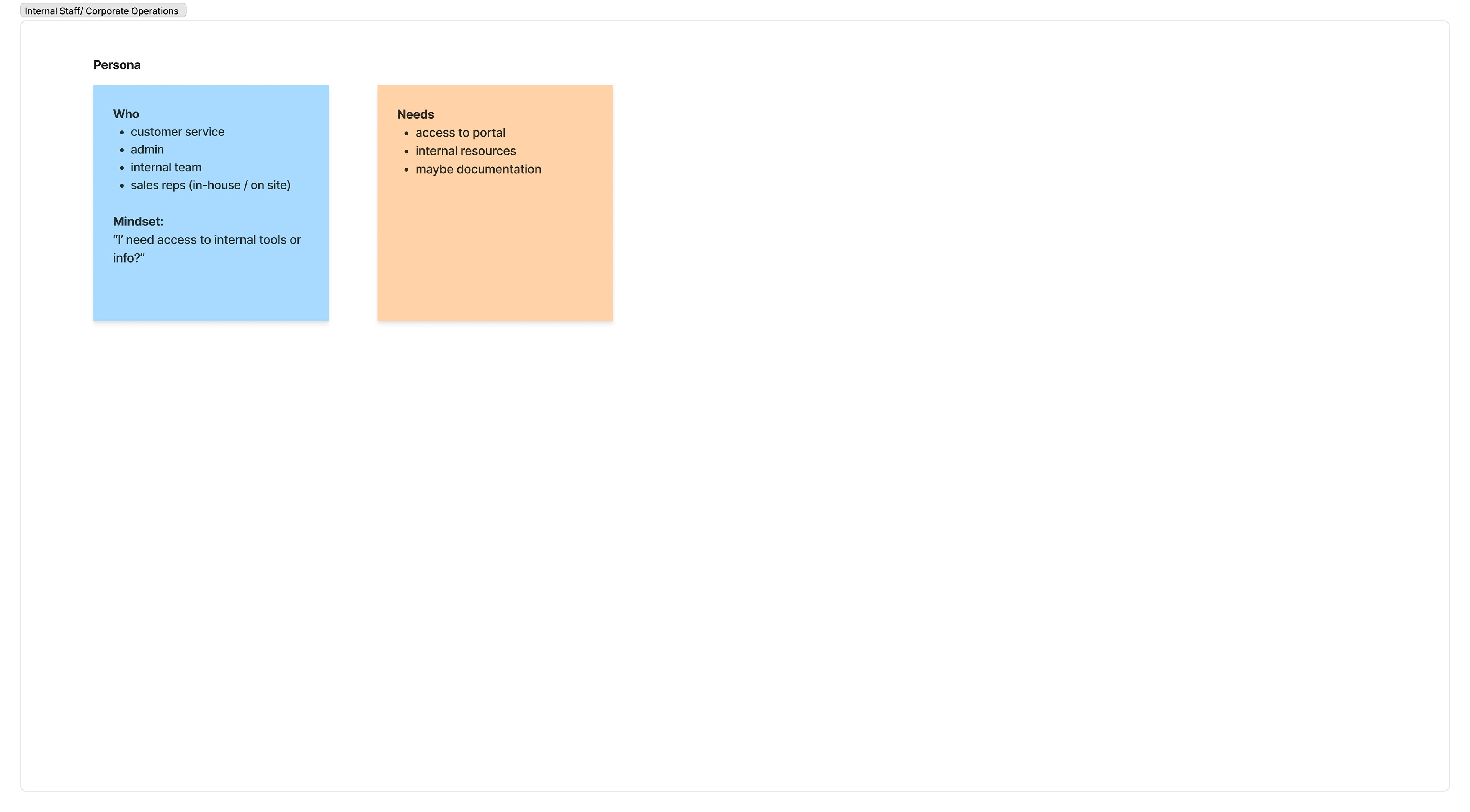
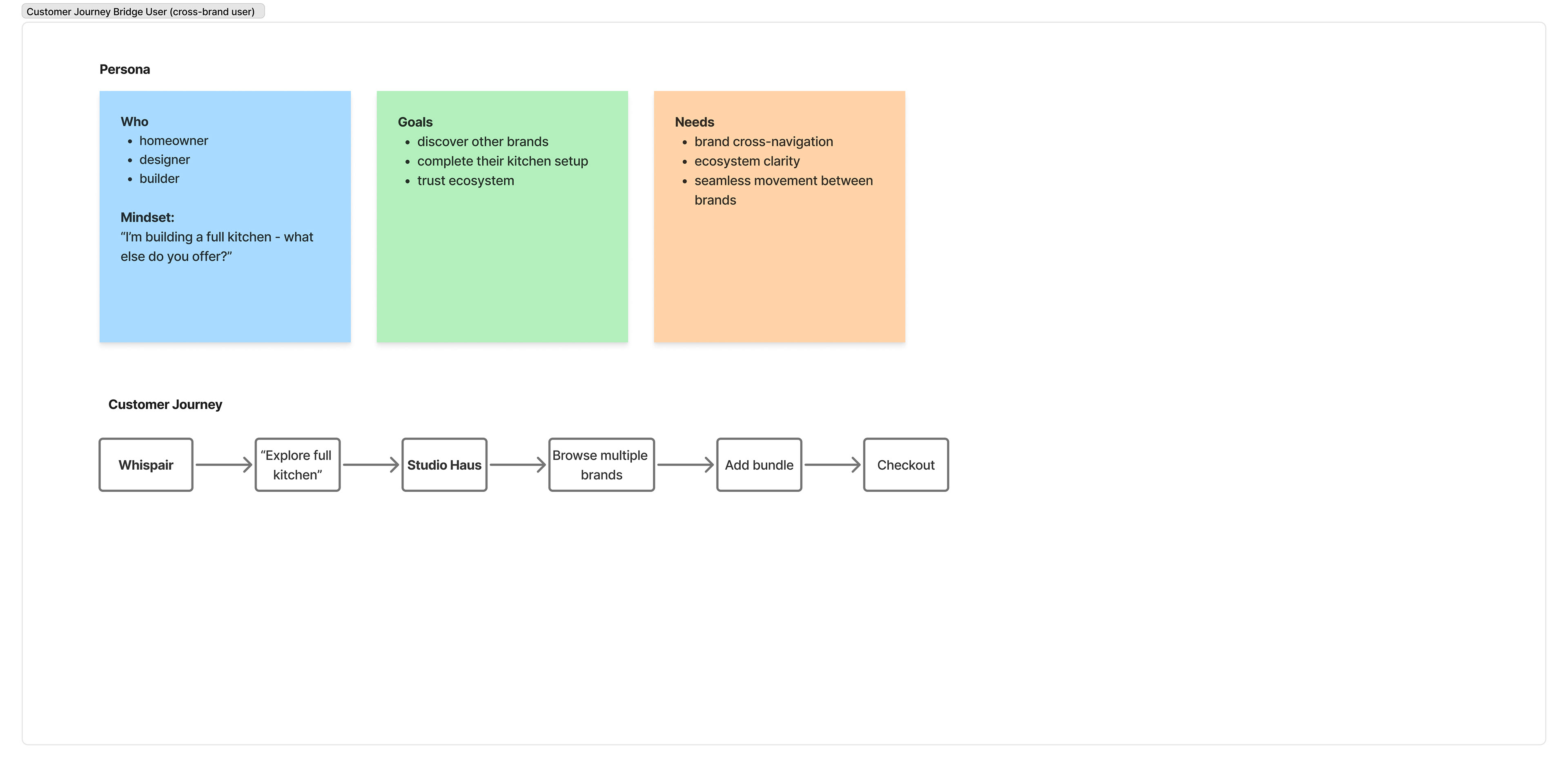
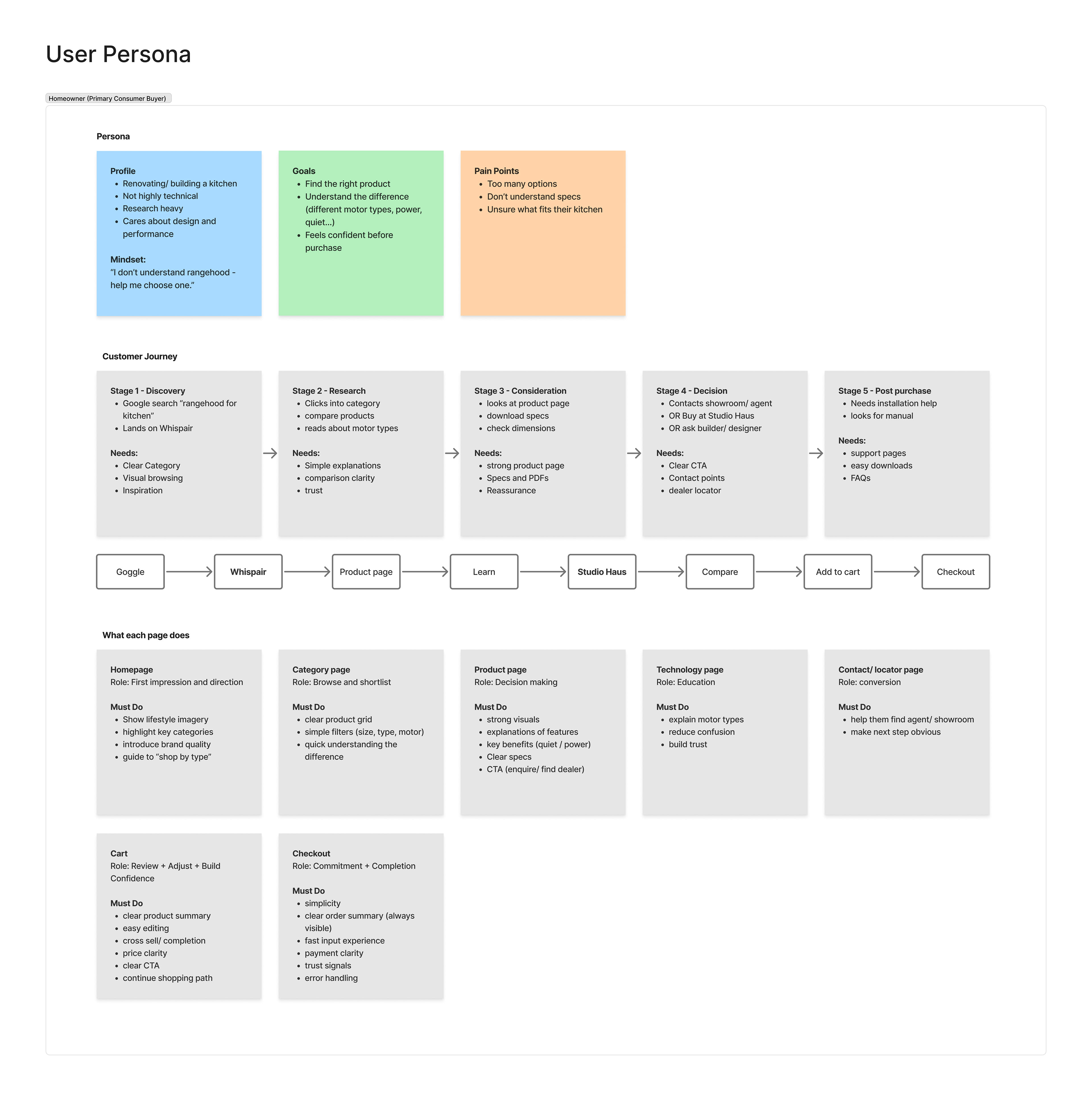
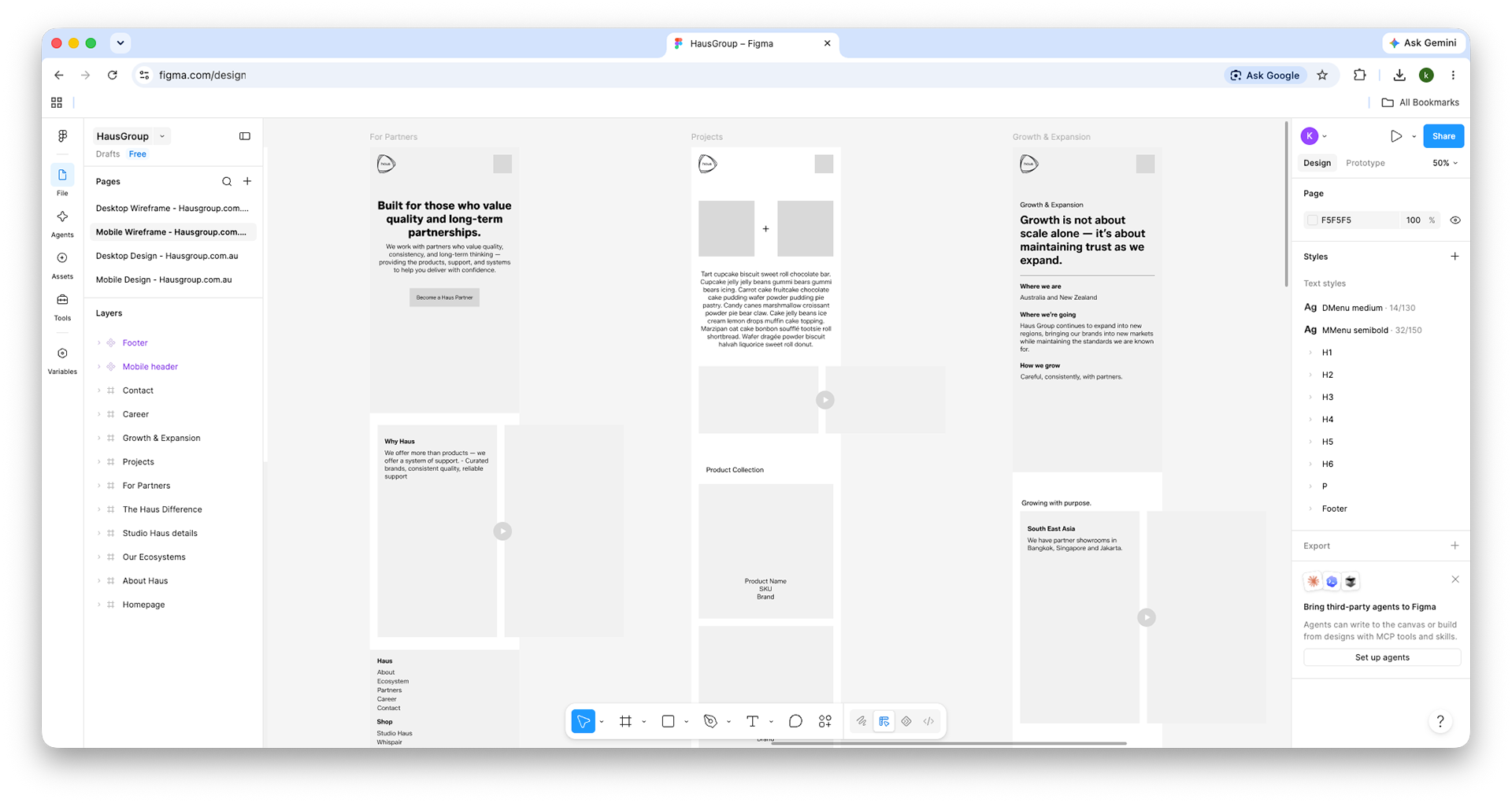
Before designing individual pages, I mapped the content architecture and sitemap for the beginning of the wider HAUS digital ecosystem. The corporate website needed to establish Haus Group at the centre while creating clear pathways into its brands, partners, projects and future commerce experiences.
This required thinking beyond a single website and establishing an architecture that could grow into a connected family of corporate, brand and commerce platforms across multiple markets. From this structure, I developed the content hierarchy and began shaping the messaging and page-level content required to support each part of the experience.
From Content to Design System
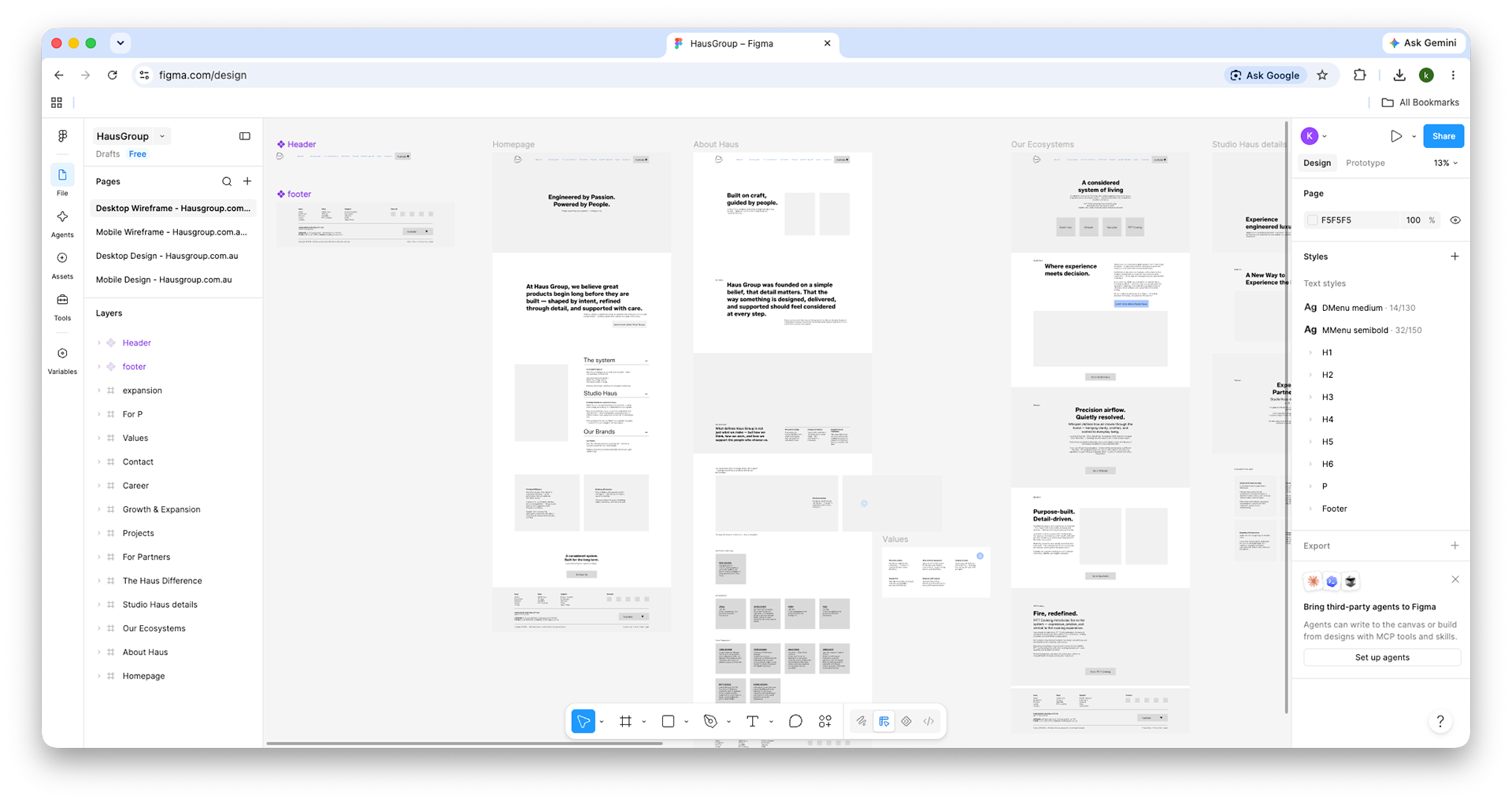
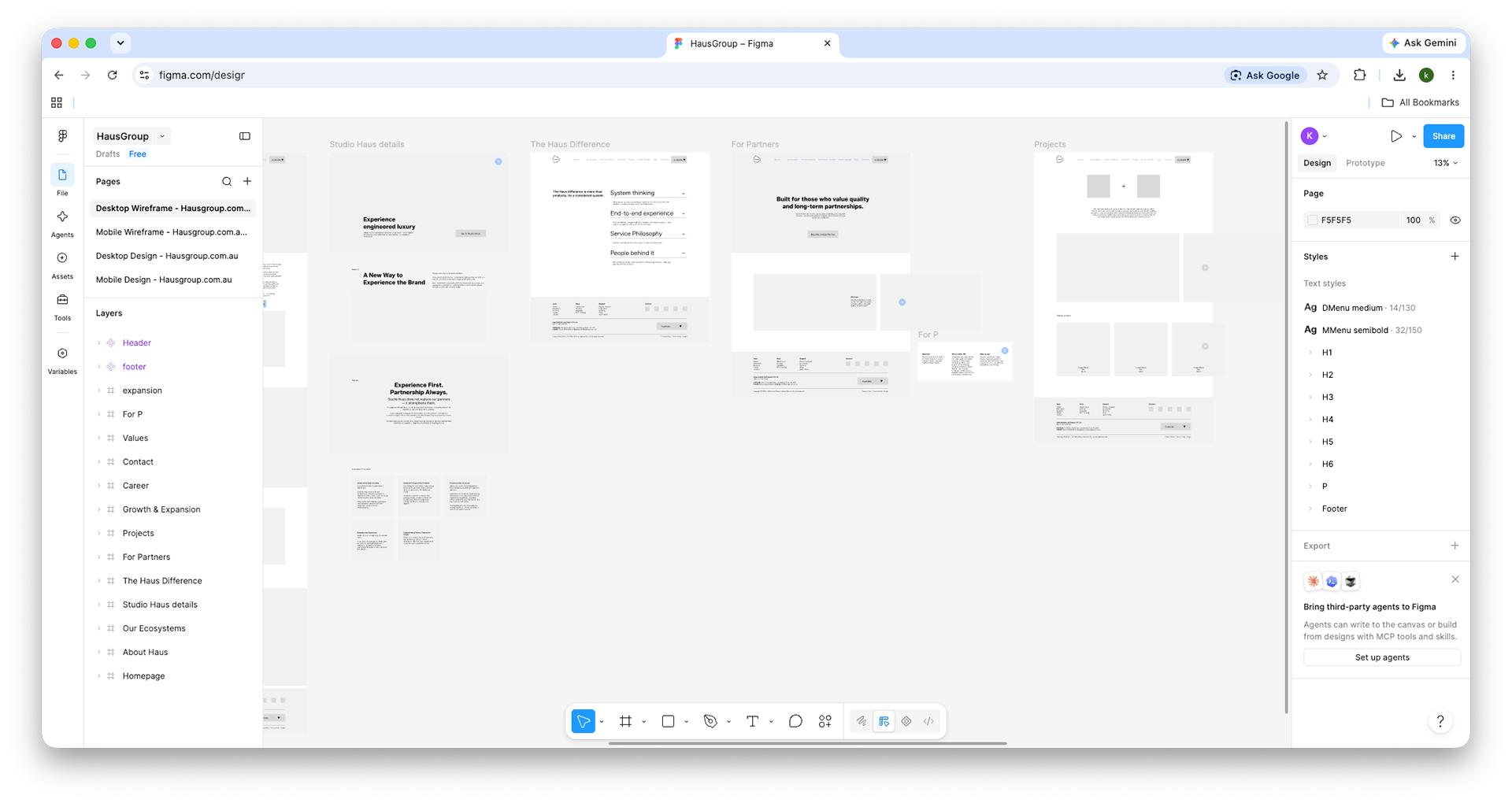
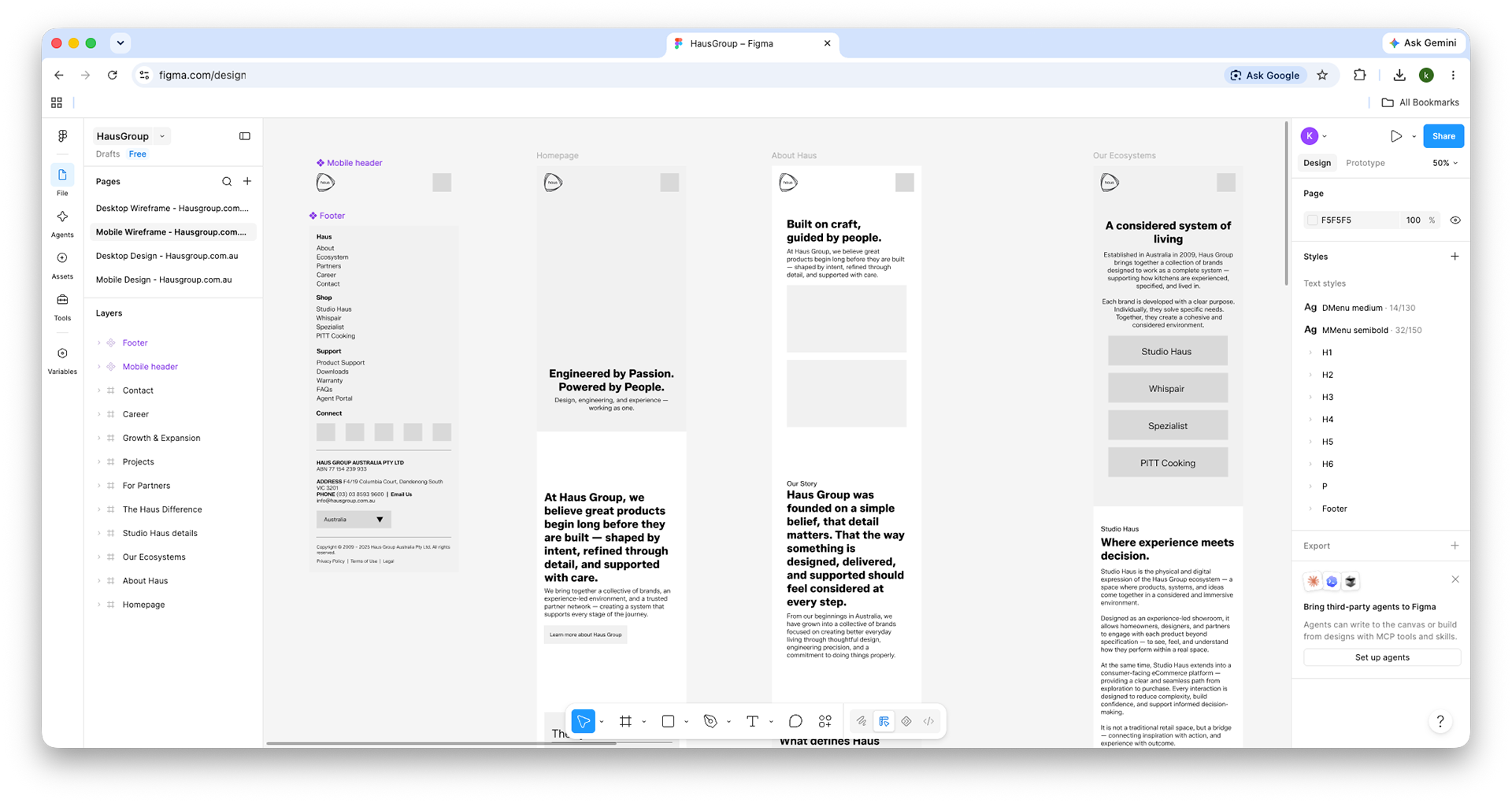
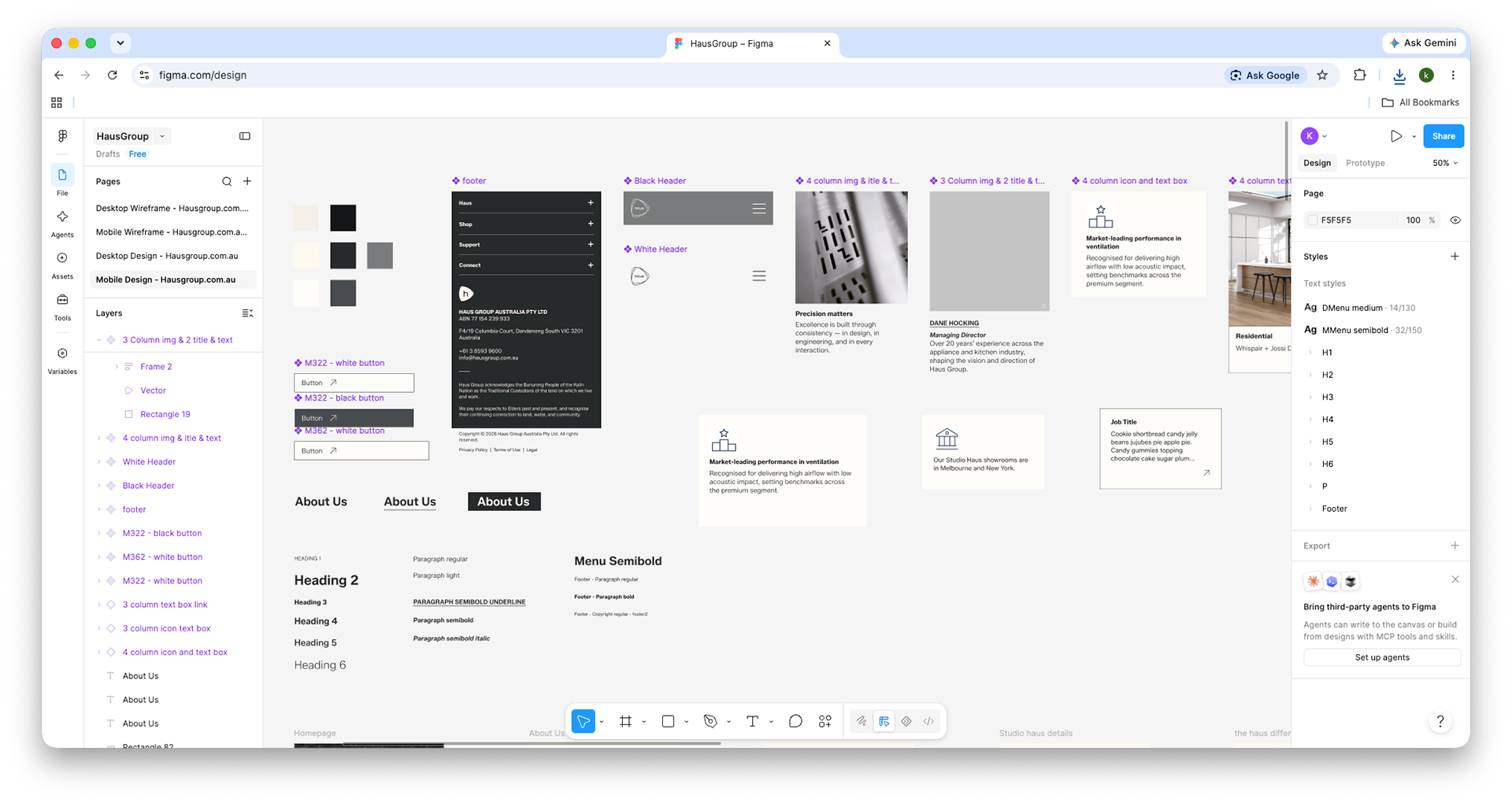
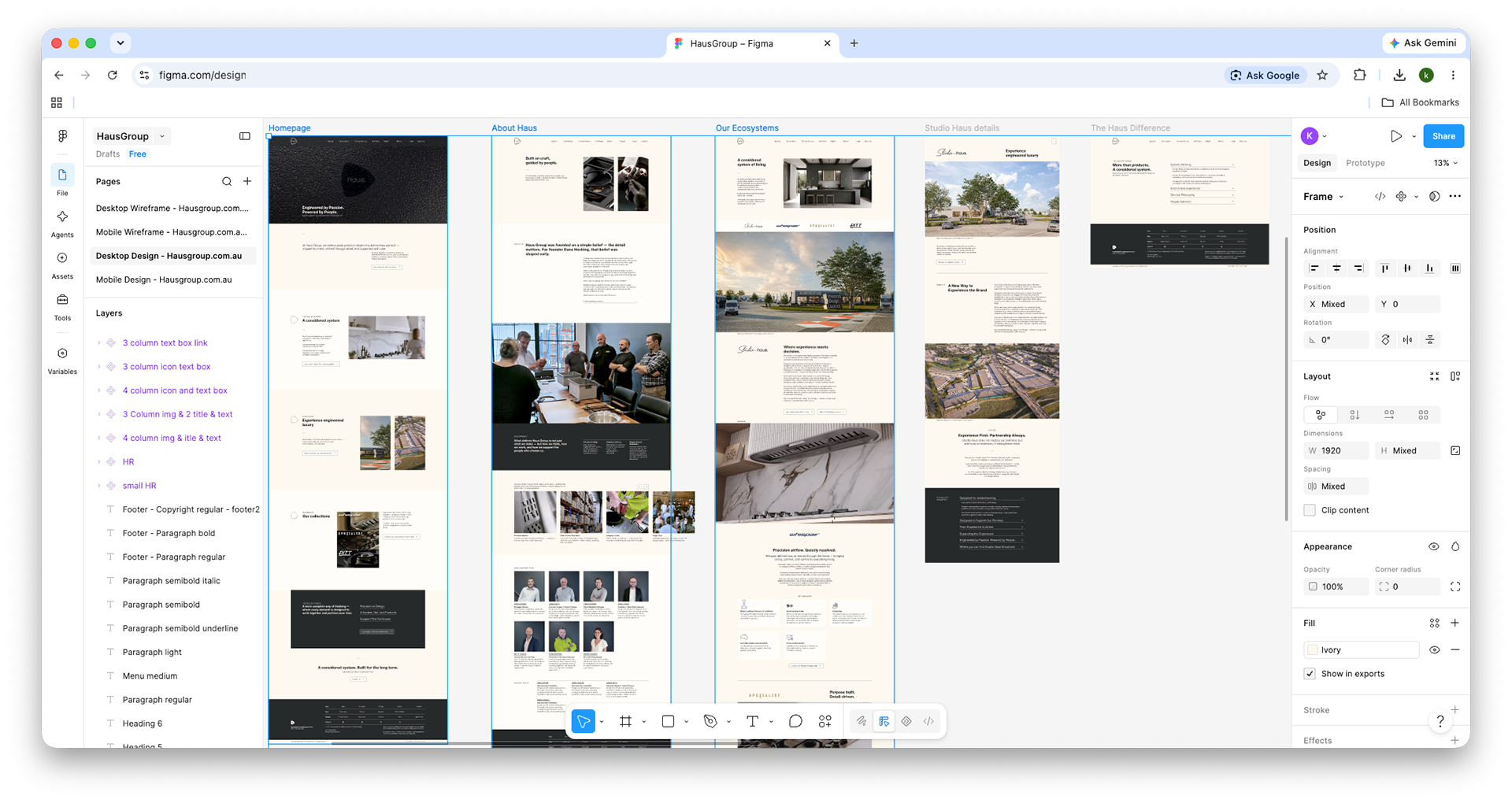
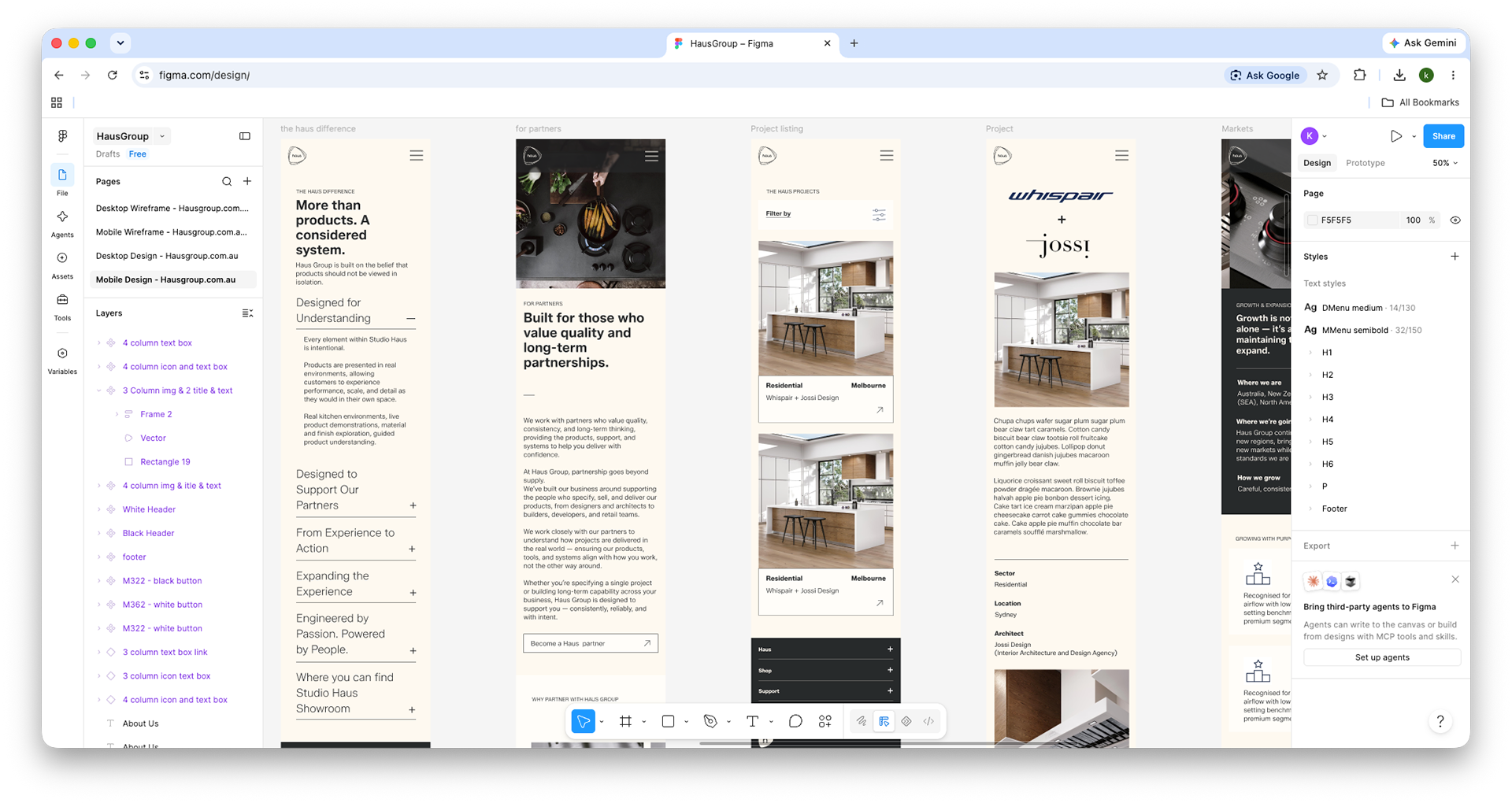
Once the architecture and content direction were established, I translated them into the website's visual and interaction design.
Rather than designing every page independently, I developed a reusable component system in Figma — establishing common patterns for typography, content blocks, imagery, cards, navigation and page structures.
This allowed the visual language to remain consistent while giving individual pages enough flexibility to tell different stories.
The system also created a direct bridge between design and development, with components conceived from the beginning around how they could be reused within the final website.
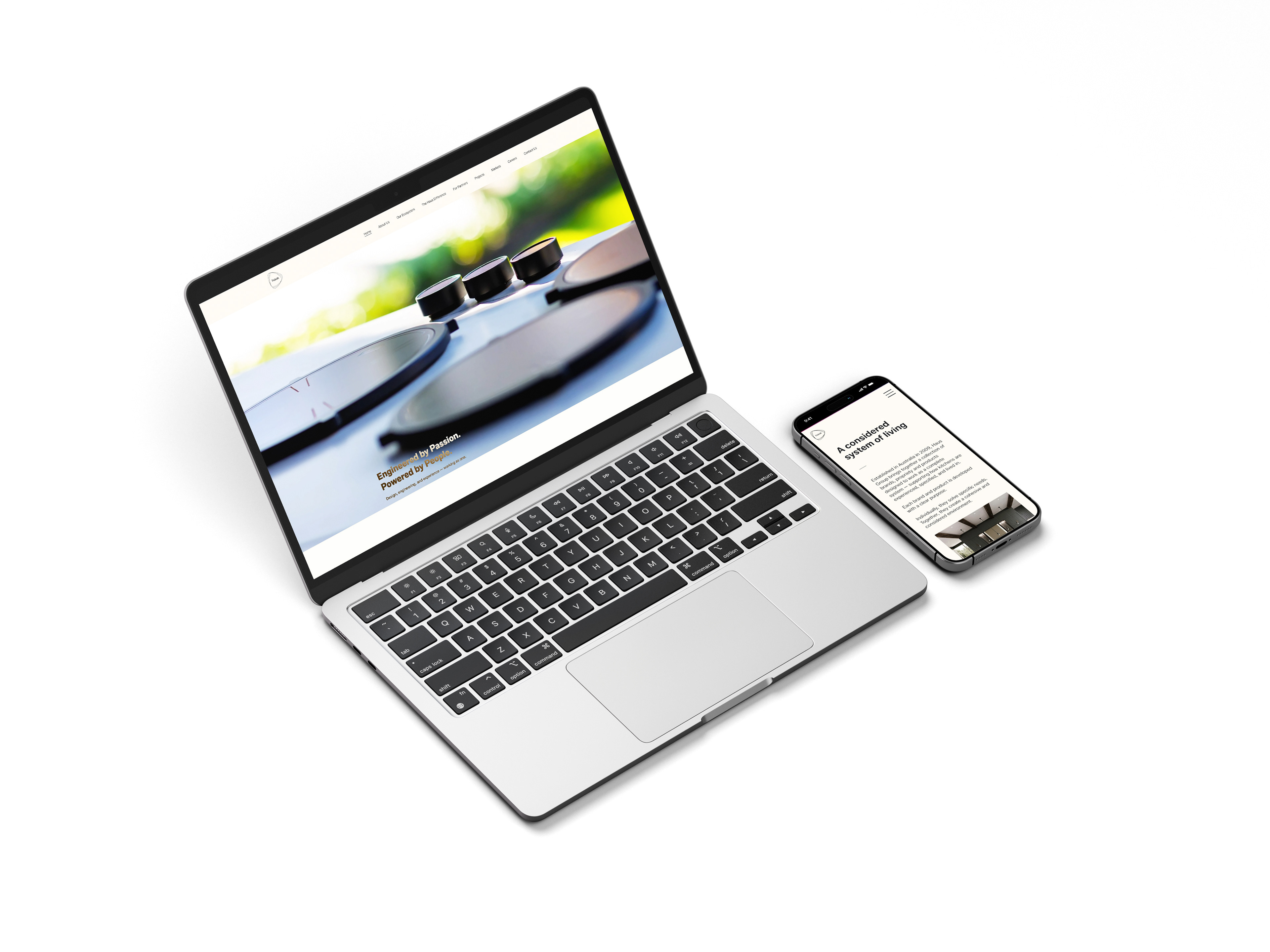
As part of the homepage experience, I created a bespoke hero video designed to introduce HAUS Group through movement, atmosphere and product imagery rather than relying solely on static messaging.
Designing the Build
The final stage was bringing the system into WordPress.
I developed the site around reusable Gutenberg structures and shared design foundations rather than relying on rigid, individually built pages. Reusable patterns, global styles and modular content structures allow new pages and future sites to inherit the same visual and UX principles established during the design process. This approach transformed the initial corporate website into the foundation of a broader system — one designed to evolve as Haus Group's brands, content and digital ecosystem continue to grow.
From Identity to Ecosystem
What began with the redesign of a brand identity ultimately became an exercise in building a connected system.
Brand identity → Internal brand language → Digital principles → Content architecture → UX/UI → Component system → WordPress development
Each stage informed the next, allowing the brand strategy established at the beginning of the project to remain visible all the way through to the structure, language, interactions and technology of the finished digital experience.
Feel free to explore the website @ https://en.hausgroup.com/ Thank you.